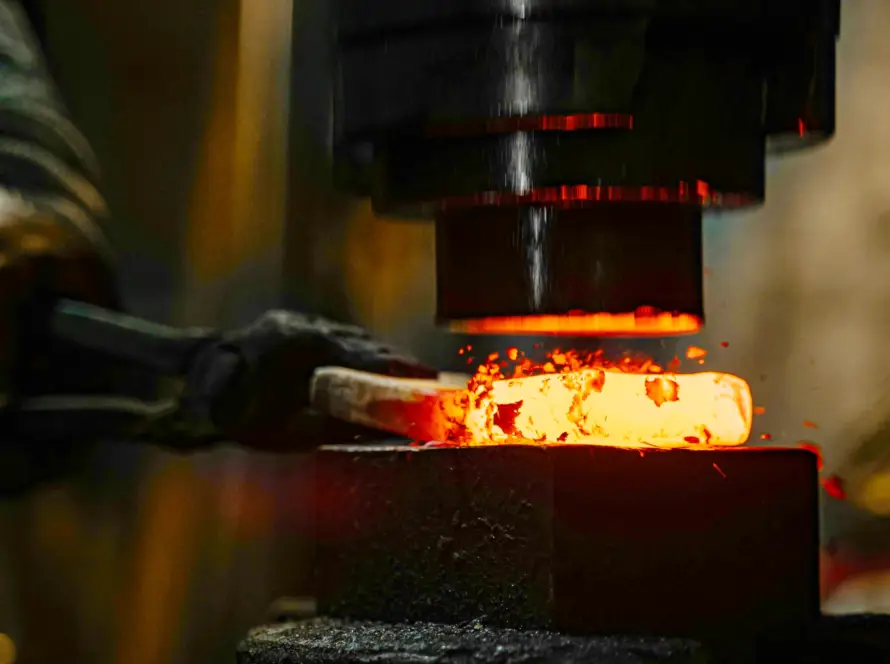
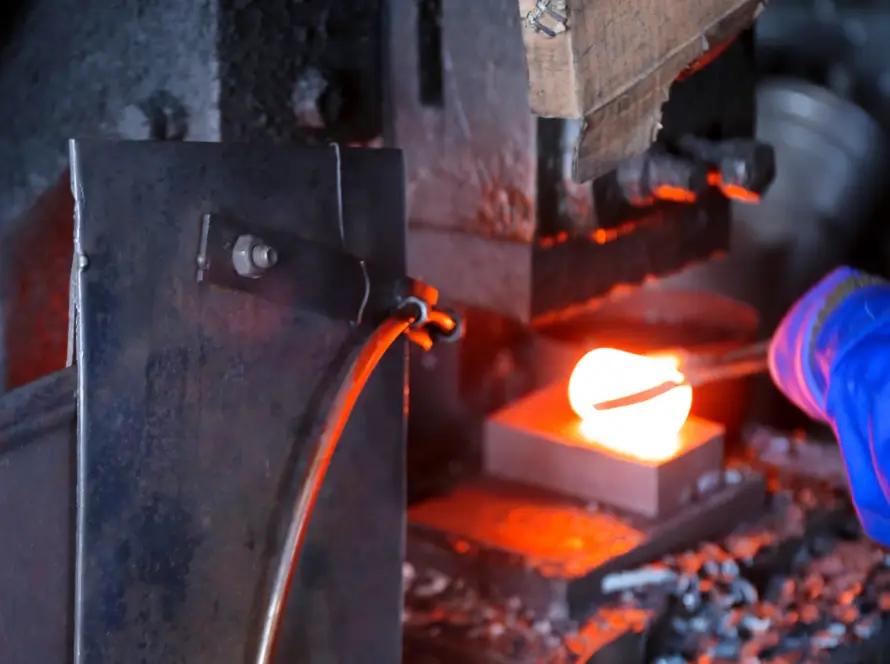
Forging is a metal forming process in which a workpiece is shaped through compressive forces such as hammering, pressing, or rolling. Unlike casting, where molten metal is poured into molds, forging works with solid metal, reshaping it into the desired geometry while improving its internal structure.
Depending on the temperature at which it is performed, forging is typically classified as cold, warm, or hot forging. A wide range of materials can be used, including carbon steel, alloy steel, and stainless steel, as well as softer metals like aluminum, brass, and copper.
One of the key advantages of forging lies in its ability to refine the metal’s grain structure. As the material is plastically deformed, the grain flow aligns with the shape of the part, resulting in enhanced strength, durability, and fatigue resistance. Combined with relatively low material waste and strong repeatability, forging remains one of the most efficient manufacturing methods for producing high-performance components.
History of Forging
Forging is one of the oldest known metalworking techniques, dating back thousands of years. Early smiths primarily worked with copper and bronze during the Bronze Age. As metallurgical knowledge advanced and iron smelting became possible, iron quickly became the dominant material for forged tools and weapons.
Traditional blacksmithing produced everyday items such as hand tools, hardware, and edged weapons. However, the true transformation of forging came during the Industrial Revolution, when mechanized hammers and presses enabled consistent, large-scale production.
Today, forging has evolved into a highly sophisticated global industry. Modern facilities incorporate automation, robotics, and precision-controlled equipment to manufacture components with tight tolerances and exceptional mechanical properties across a wide range of industries.
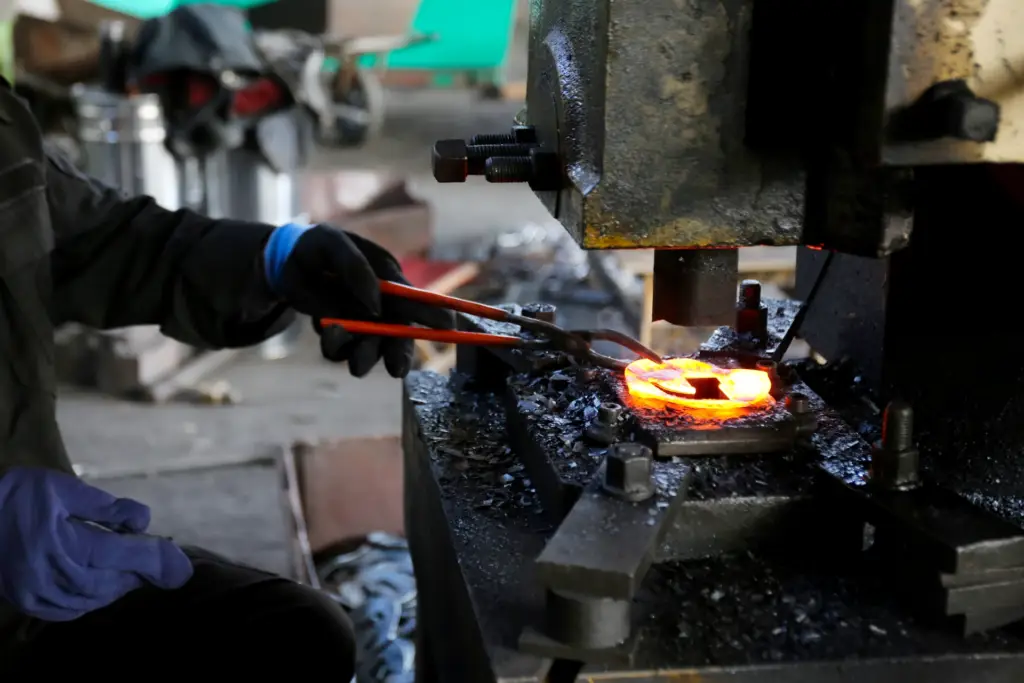
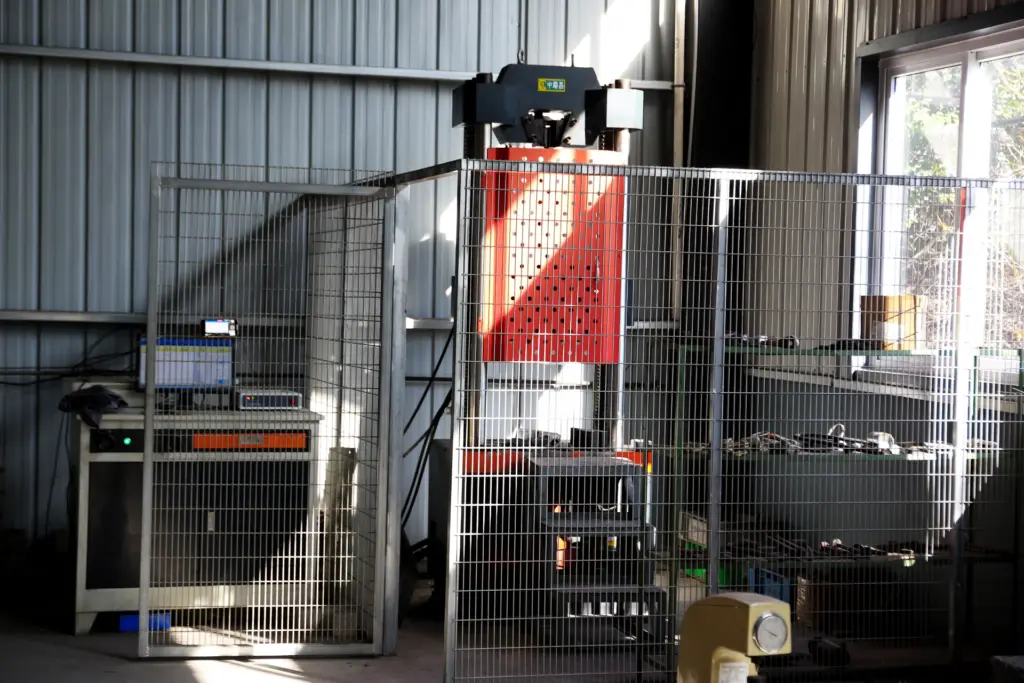
Understanding Modern Forging Methods
Forging technology has developed into several distinct methods, each designed to meet specific production needs, material requirements, and component geometries.
Drop Forging
Drop forging is one of the most widely used techniques and gets its name from the process of dropping a hammer onto heated metal to shape it within a die. The die contains the geometry that the metal will ultimately take, and repeated hammer strikes force the material to flow accordingly.
This method is commonly divided into open-die and closed-die forging, depending on how the metal is constrained during deformation.
Open-Die Forging
Open-die forging, often referred to as smith forging, is the most traditional approach. In this process, the metal is compressed between flat or simply shaped dies without being fully enclosed. This allows the material to flow freely in multiple directions, with the operator guiding its shape throughout the process.
Because of its flexibility, open-die forging is especially suitable for large components and custom parts where precision dies are not practical. It also plays a crucial role in refining internal grain structure and eliminating defects, resulting in strong, reliable components for demanding applications.
Closed-Die Forging
Closed-die forging, also known as impression-die forging, involves placing the metal inside a die cavity that fully or partially encloses it. When the hammer strikes, the material flows to fill the cavity, forming a precise shape.
This process typically occurs in multiple stages. The material is first pre-shaped, then refined in intermediate cavities, and finally finished in a detailed impression that defines the final geometry. During this process, excess material may be forced out as flash, which is later removed.
Closed-die forging is widely used for producing complex parts in large volumes. It offers excellent dimensional accuracy, repeatability, and material efficiency, making it ideal for components such as automotive parts, valves, and mechanical fittings.
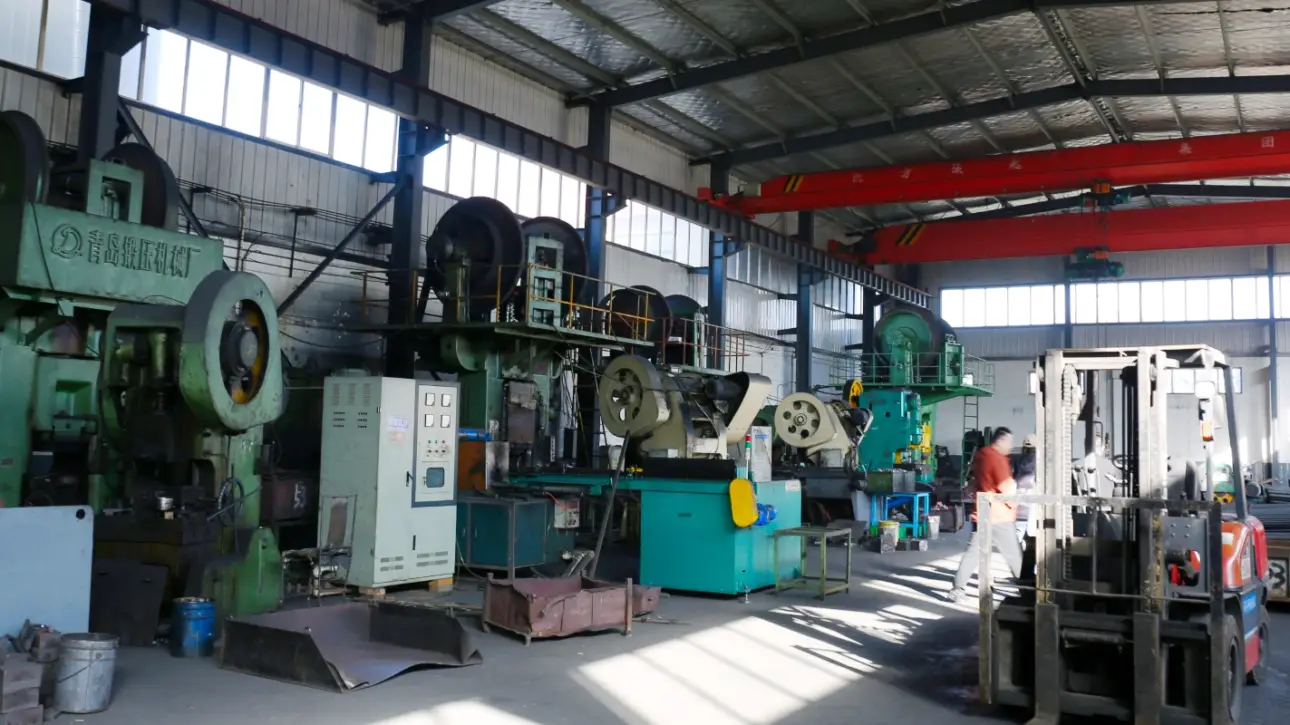
Roll Forging
Roll forging uses rotating cylindrical rolls to progressively shape a metal bar. As the heated material passes through grooved rolls, its thickness is reduced while its length increases, gradually forming the desired profile.
This method is particularly effective for producing elongated components with consistent cross-sections. It also improves material utilization and enhances grain flow, which contributes to better mechanical performance in the finished part.
Press Forging
Press forging differs from drop forging in the way force is applied. Instead of repeated hammer blows, a slow and continuous pressure is used to deform the metal. This allows the force to penetrate deeper into the material, ensuring more uniform deformation throughout the entire workpiece.
Because of this controlled process, press forging offers improved dimensional accuracy and better control over internal strain. It is often used for large components and high-volume production where consistency and structural integrity are critical.
Upset Forging
Upset forging focuses on increasing the diameter of a workpiece by compressing its length. This process is commonly used to produce components such as bolts, fasteners, and shafts with enlarged ends.
High-speed presses are typically employed, allowing rapid production rates and efficient material usage. The process can be automated, making it highly suitable for large-scale manufacturing environments.
Automatic Hot Forging
Automatic hot forging combines speed, efficiency, and automation. Steel bars are fed into the system, heated rapidly using induction coils, and then transferred through multiple forming stages.
This process allows for high production output with minimal labor involvement. It also reduces material waste and can be integrated with cold-forming operations for finishing, combining the benefits of both hot and cold forging techniques.
Precision and Isothermal Forging
Precision forging, also known as near-net-shape forging, is designed to minimize or eliminate the need for machining after the forging process. By producing parts that are extremely close to their final dimensions, manufacturers can significantly reduce material waste and production costs.
Isothermal forging takes precision a step further by maintaining the metal and die at the same temperature throughout the process. This controlled environment reduces thermal gradients and allows for highly consistent deformation. Although more specialized, it is ideal for high-performance applications requiring exceptional accuracy and material properties.
Why Forging Remains Essential
Despite advances in alternative manufacturing technologies, forging continues to be a preferred method for producing critical components. Its ability to enhance mechanical properties, improve structural integrity, and deliver reliable performance under stress makes it indispensable in industries such as automotive, energy, construction, and heavy machinery.
From traditional blacksmithing techniques to modern automated production lines, forging has continuously evolved while maintaining its core advantage: the ability to create stronger, more durable metal components from the inside out.