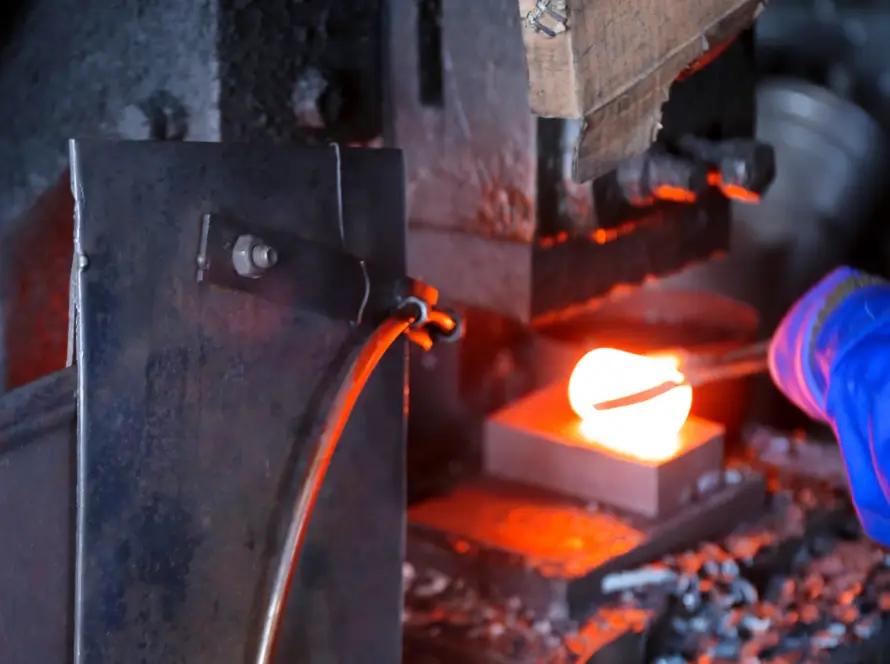
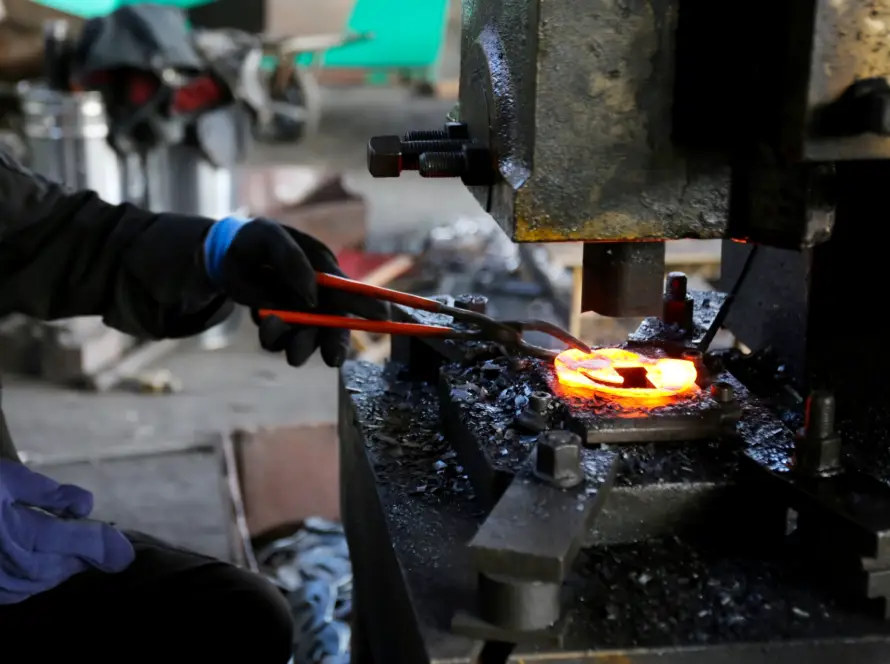
Metal forging is a manufacturing process that shapes solid metal using controlled compressive forces. Instead of melting the material as in casting, forging deforms it in its solid state, either at high temperatures or near room temperature. This seemingly simple difference has a major impact on performance.
During forging, the internal grain structure of the metal is refined and aligned along the geometry of the part. This results in components with superior mechanical properties, including higher strength, better fatigue resistance, and improved structural integrity. Because of this, forging is widely used for critical applications where failure is not an option.
How the Metal Forging Process Works
Although forging methods can vary, the process generally follows a consistent path from raw material to finished component.
Heating and Preparation
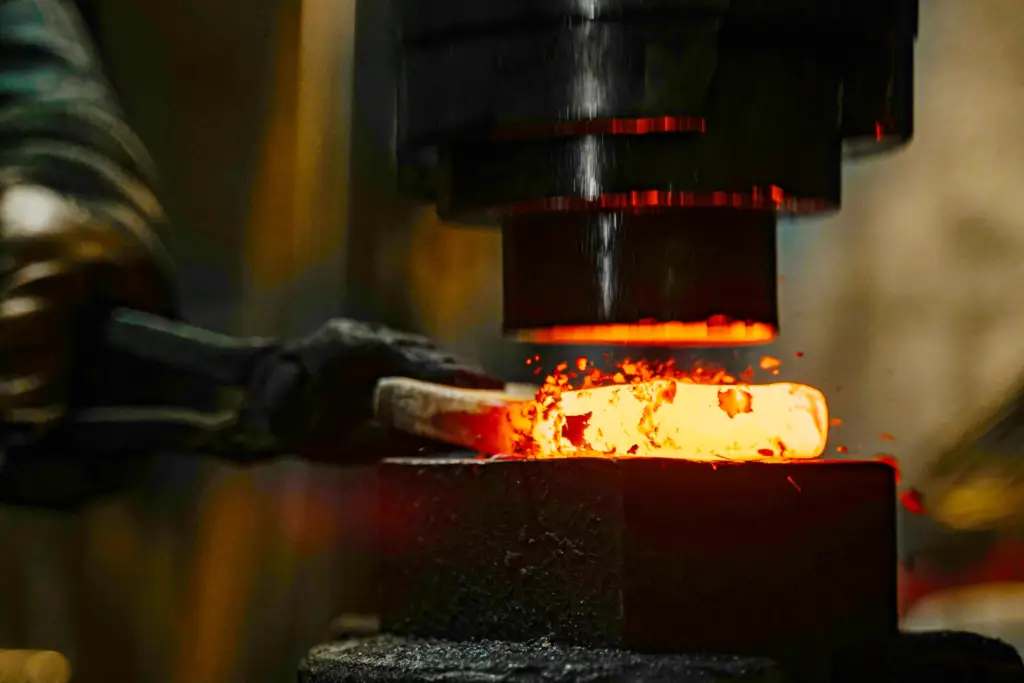
In many cases, the metal is heated to increase its ductility and reduce resistance to deformation. This is especially important in hot forging, where temperatures exceed the material’s recrystallization point. Proper temperature control ensures the metal can be shaped efficiently without compromising its properties.
Forming and Shaping
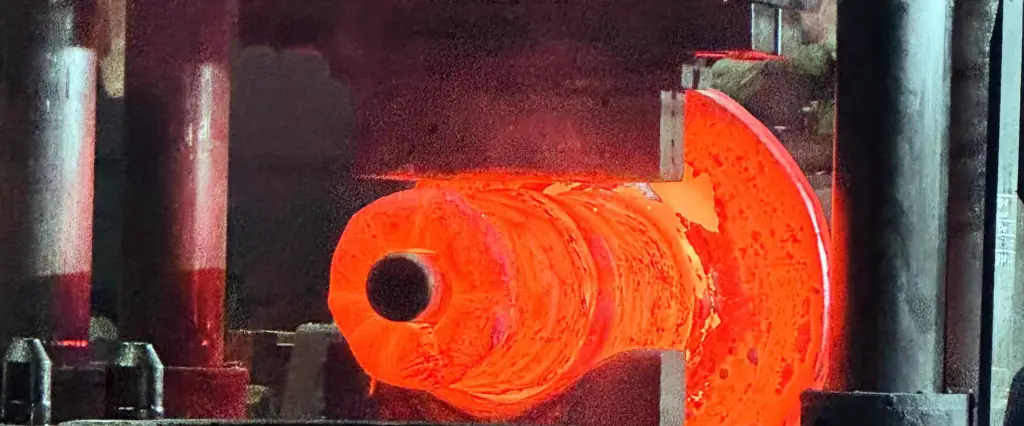
The prepared material is then subjected to compressive force using forging hammers or presses. Depending on the complexity of the part, it may be shaped in open dies or enclosed within precision-engineered molds. The force applied during this stage not only forms the part but also improves its internal structure.
Cooling and Finishing
After forming, the component is cooled under controlled conditions. Additional processes such as heat treatment, machining, or surface finishing are often applied to meet exact dimensional and performance requirements.
Types of Forging Methods
Different forging techniques are used depending on part geometry, production volume, and mechanical requirements.
Hot, Warm, and Cold Forging
Hot forging is the most common approach, allowing complex shapes to be formed with reduced force. Cold forging, performed at or near room temperature, delivers excellent surface finish and dimensional accuracy. Warm forging sits between the two, offering a balance of formability and precision.
Open-Die vs Closed-Die Forging
Open-die forging is typically used for large, simple components such as shafts or heavy rings. The metal is compressed between flat or basic dies and gradually shaped.
Closed-die forging, also known as impression die forging, uses custom-designed molds to produce complex parts with tight tolerances. This method is ideal for high-volume production and is widely used in automotive and industrial applications.
Materials Used in Metal Forging
A wide range of metals can be forged, each selected based on the demands of the application. Steel remains the most commonly used material due to its strength and versatility, while stainless steel provides enhanced corrosion resistance. Aluminum is often chosen for lightweight applications, and more advanced materials such as titanium and nickel alloys are used in high-performance environments where strength and heat resistance are critical.
The ability to work with such a broad spectrum of materials makes forging a highly adaptable process across industries.
Advantages of Forged Components
One of the key reasons forging is preferred in demanding applications is the superior quality of the final product. Forged components exhibit exceptional strength because their grain structure follows the shape of the part, reducing weak points and improving load-bearing capacity.
In addition to strength, forging enhances reliability by minimizing internal defects such as porosity. This leads to more consistent performance, especially in high-stress environments. Over time, forged parts also tend to last longer, reducing maintenance costs and improving overall efficiency.
From a production perspective, forging can be highly cost-effective in large volumes. While initial tooling requires investment, the reduction in material waste and secondary machining often offsets these costs.
Applications Across Industries
Forged components are found in nearly every major industrial sector. In automotive manufacturing, they are used in engines, transmissions, and suspension systems where durability is essential. The oil and gas industry relies on forged valves, flanges, and fittings to handle extreme pressure and corrosive environments.
In aerospace, where safety standards are exceptionally high, forging is used to produce critical structural and engine components. Heavy machinery and energy sectors also depend on forged parts for their strength and long-term reliability under continuous load.
Forging vs Casting: Key Differences
While both forging and casting are widely used metal forming processes, they serve different purposes. Casting allows for greater design flexibility and can produce complex shapes with lower initial tooling costs. However, it often results in internal defects and lower mechanical strength.
Forging, by contrast, delivers superior structural integrity and mechanical performance. For applications that require high strength, impact resistance, and reliability, forging is generally the preferred choice.
The Future of Metal Forging
The forging industry continues to evolve alongside advancements in manufacturing technology. Automation and robotics are improving consistency and efficiency, while simulation software enables more precise die design and process optimization.
There is also a growing focus on sustainability. Modern forging operations aim to reduce energy consumption, minimize waste, and produce near-net-shape components that require little additional processing. These developments are helping forging remain competitive in an increasingly efficiency-driven global market.