

Stainless steel forging is a manufacturing process that uses controlled heat and mechanical force to shape stainless steel into strong, durable components. Compared with casting or machining from solid bar, forging can improve the mechanical properties and structural integrity of a component by refining the metal’s grain structure during deformation.
Because stainless steel offers excellent corrosion resistance, strength, toughness, and heat resistance, forged stainless steel components are widely used in demanding industries such as oil and gas, marine, chemical processing, power generation, food processing, automotive, and industrial equipment.
What Is Stainless Steel Forging?
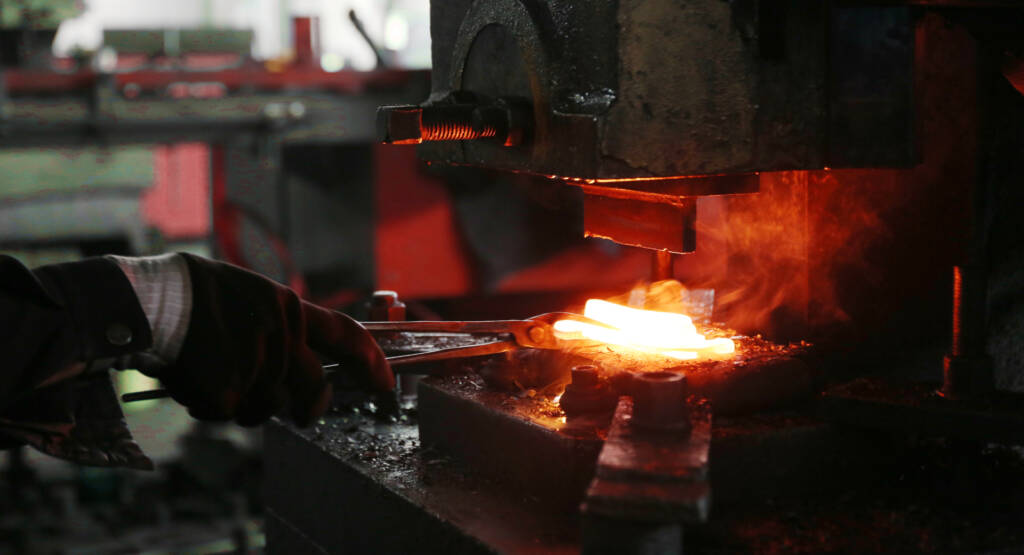
Stainless steel forging involves heating stainless steel billets or other raw material to a suitable temperature and then applying compressive force using a forging press, hammer, or other forging equipment. The material is progressively formed into the required shape before being cooled and subjected to additional processes when necessary.
The forging process can be carried out using different techniques depending on the component’s size, geometry, production volume, and performance requirements. Open-die forging is commonly used for larger and relatively simple components, while closed-die forging is suitable for producing more complex shapes with tighter dimensional control.
After forging, components may undergo heat treatment, shot blasting, machining, surface finishing, inspection, and other secondary operations to achieve the required specifications.
Common Stainless Steel Grades for Forging
A wide range of stainless steel grades can be forged, with the appropriate grade depending on the application and required properties.
Austenitic stainless steels such as 304 and 316 are among the most commonly used grades. Stainless steel 304 provides good corrosion resistance and formability, while 316 contains molybdenum, giving it improved resistance to chloride environments and making it particularly useful for marine and chemical applications.
Martensitic stainless steels, such as 410 and 420, can provide higher hardness and wear resistance after suitable heat treatment. They are often used for shafts, valves, pump components, and other applications where mechanical strength and wear resistance are important.
Other grades, including duplex stainless steels and precipitation-hardening stainless steels, can also be forged when higher strength, corrosion resistance, or specialized performance is required.
How Does Stainless Steel Forging Work?
The process generally begins with selecting stainless steel according to the required chemical composition and mechanical properties. The material is then cut into suitable billets or blanks before being heated to the appropriate forging temperature.
Once heated, the stainless steel is formed under controlled pressure. Depending on the manufacturing method, several forging operations may be required to achieve the desired geometry. Careful control of temperature, deformation, tooling, and cooling conditions is important because improper processing can result in defects or undesirable material properties.
After forging, the component may receive heat treatment to obtain the required hardness, strength, and microstructure. Machining is then used to achieve precise dimensions, tolerances, holes, threads, or other finished features.
Quality inspection is an important final stage. Depending on the application, forged stainless steel parts may be inspected using dimensional measurement, hardness testing, chemical composition analysis, ultrasonic testing, magnetic particle testing, or other inspection methods.
Advantages of Stainless Steel Forging
One of the main advantages of stainless steel forging is its ability to produce components with excellent mechanical strength and structural integrity. The deformation that occurs during forging can help produce a favorable grain flow and reduce internal discontinuities compared with some alternative manufacturing processes.
Forged stainless steel also combines these mechanical properties with the inherent corrosion resistance of stainless steel. This makes it suitable for components exposed to moisture, chemicals, seawater, elevated temperatures, and other demanding environments.
Forging can also reduce the amount of material that must be removed during machining, particularly when near-net-shape forging is used. For high-volume production, properly designed forging processes can provide consistent component quality and efficient material utilization.
Applications of Stainless Steel Forgings
Stainless steel forgings are used across many industrial sectors. In the oil and gas industry, forged components are commonly found in valves, fittings, flanges, pressure-containing equipment, and other critical systems.
The marine industry uses stainless steel forgings for components that must withstand seawater and corrosive environments. In chemical processing, corrosion-resistant forged parts are used in pumps, valves, pipe connections, and equipment exposed to aggressive media.
Power generation, food processing, pharmaceutical equipment, automotive systems, and general industrial machinery also use stainless steel forgings where strength, durability, cleanliness, and corrosion resistance are important.
Stainless Steel Forging vs. Stainless Steel Casting
Forging and casting are both widely used metal manufacturing processes, but they produce components in different ways. Casting involves pouring molten stainless steel into a mold, while forging forms solid stainless steel through controlled mechanical deformation.
Forging is often preferred when high mechanical strength, toughness, and structural integrity are critical. Casting, however, can be advantageous for components with highly complex geometries or internal cavities that would be difficult to produce through forging.
The right process depends on the component design, material grade, production volume, dimensional requirements, performance requirements, and overall manufacturing cost.
Choosing a Stainless Steel Forging Manufacturer
Choosing the right forging manufacturer is important for achieving consistent quality and reliable component performance. A capable supplier should have appropriate forging equipment, material knowledge, heat-treatment capabilities, machining capacity, and quality-control procedures.
For OEM projects, it is also important to consider whether the manufacturer can support the complete production process, from material sourcing and forging to heat treatment, machining, inspection, and final delivery. Clear communication of drawings, material specifications, tolerances, standards, and inspection requirements helps ensure that the finished components meet the intended application requirements.
Conclusion
Stainless steel forging provides a practical way to manufacture strong and durable components for demanding industrial applications. With a wide selection of stainless steel grades and forging methods available, the process can be adapted to produce components ranging from relatively simple fittings to complex engineered parts.
By selecting the appropriate stainless steel grade, forging process, heat treatment, machining method, and inspection requirements, manufacturers can produce components with the combination of strength, corrosion resistance, dimensional accuracy, and durability required for their specific applications.
